
I’m always drawn to stories that people don’t know about, particularly when they’re inside of a story that everyone knows about.
—Robert Redford
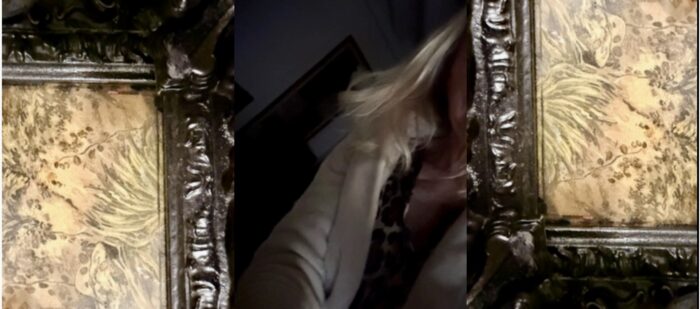
Like Redford, I’m drawn to the story inside a story—compelled to place my fingers on its pulse. What lives for a while in the corners of the frame, seeps out the back, leaks out in cracks, between the years of time. Go behind to get a glimpse. In front you can just suppose. Outside the static framework lies the stealth of brushstrokes, the hush allure—the flowing strands of knowing.
You’ll never really know what dwells in the cave of memory—what’s alive & pure, what’s been tampered with, what snakes its way through. And do you ever know what ignites the glow of impulse that reveals itself naked in the moonlight? The tides a willing witness—the currents not so true.
Likewise, you may never really get beyond institutionalized lore that glosses trademark stories, family sagas and so-called glories of the past. Oh, real glories & stories exist, perhaps in the now—and in the lost & found—but to discover them, you may have to plumb the depths or reach high & higher for the ether.
Sometimes silent stretches & quiet moments say it sharper than clusters of words or generations of lines bound by convention filled with questionable intention.
Do you really need wordy explanations? Considered by many, the best of Redford’s roles, All Is Lost (2013), an almost silent film with a spare 51 (barely audible) words relies exclusively on visuals to convey the sole character’s journey. An experienced sailor (with no intro backstory) on a solo voyage in the Indian Ocean—facing impending disaster. One man, 51 words, running time 1 hour 46 minutes.
Another minimalist word count of only 3,600 words for all the dialogue (which for a feature length film typically contains 18,000—24,000 words), propels an early Redford role of Jeremiah Johnson (1972). The story of a Mexican American war veteran who leaves civilization with the urge to become a mountain man. A resourceful and resilient character of few words. Running time 1 hour 48 minutes.
And as the fiercely independent Denys Finch Hatton in Out of Africa (1985), Redford excels at sparse and direct dialogue, engaging visual storytelling and actions to convey his spirit—living life on his own terms. Running time 2 hours 41 minutes.
Ambiguity is something that I really respond to. I like the complexity of it.
—Robert Redford
You’ll think you see the same reflections in the frame as I do but certain mirrors have an inner splendor and make a tender on their own. Depends on the kind, the shape, on the slice of view, on inexplicable arrangements. On a magician’s hand—a time or two.
Some days, you think you’re a storm chaser who can outmaneuver rapid forming traps. You believe you can just slip around the deadly drafts undetected, pull some fancy lever and the universe will deliver on your doorstep. No, no—not so. But you do it anyway.
Storytelling is important. Part of human continuity.
—Robert Redford
Ah, but it’s Libra season now, so I’m counting on the equilibrium & energy of the particular placement of sun & moon—a blaze of Venus beauty, the scales of justice balanced, and a surge of inner harmony. Don’t be seduced by the plot, circumstances, or events that create the narrative framework. To pin the heart & soul of your story, absorb the complexities, bathe in the visuals, and listen for the links. For this, we can learn from the powerful performances of Robert Redford—and his commitment to the continuity of storytelling with the Sundance Institute. Because it’s the story—inside the story—that matters!
Very well written!! I have always been equally as intrigued by ambiguity!
The world would be a darker place without stories, story writers and story readers.
Interestingly Redford says that he is attracted to the complexity of ambiguity and in that attraction and attention he has found the simplicity on the other side of complexity . . . and unpredictable patterns that make the story flow.
I like this from Amanda Gorman about storytelling: “Writing can transform the world, but we also know that writing can transform the writer. Which when you think about it is even more transcendent, because it means we, just by telling our stories and our truths and our narratives, are becoming better global citizens, better people. And that in itself is an engine of wider, broader change.”
Thanks for this and your other postings, always they engage my mind.
There is nothing ambiguous about your penetrating probe into ambiguity. All the while your words are a lyrical poem weaving in and around the discussion.
Mr. Redford would be pleased to see his most silent yet powerful roles being recognized. I am profoundly sad at his passing. But reading this invokes his spirit perfectly. Thank you!